
News
MEDIA RELEASES
For inquiries, please contact news@thunderbaypolice.ca

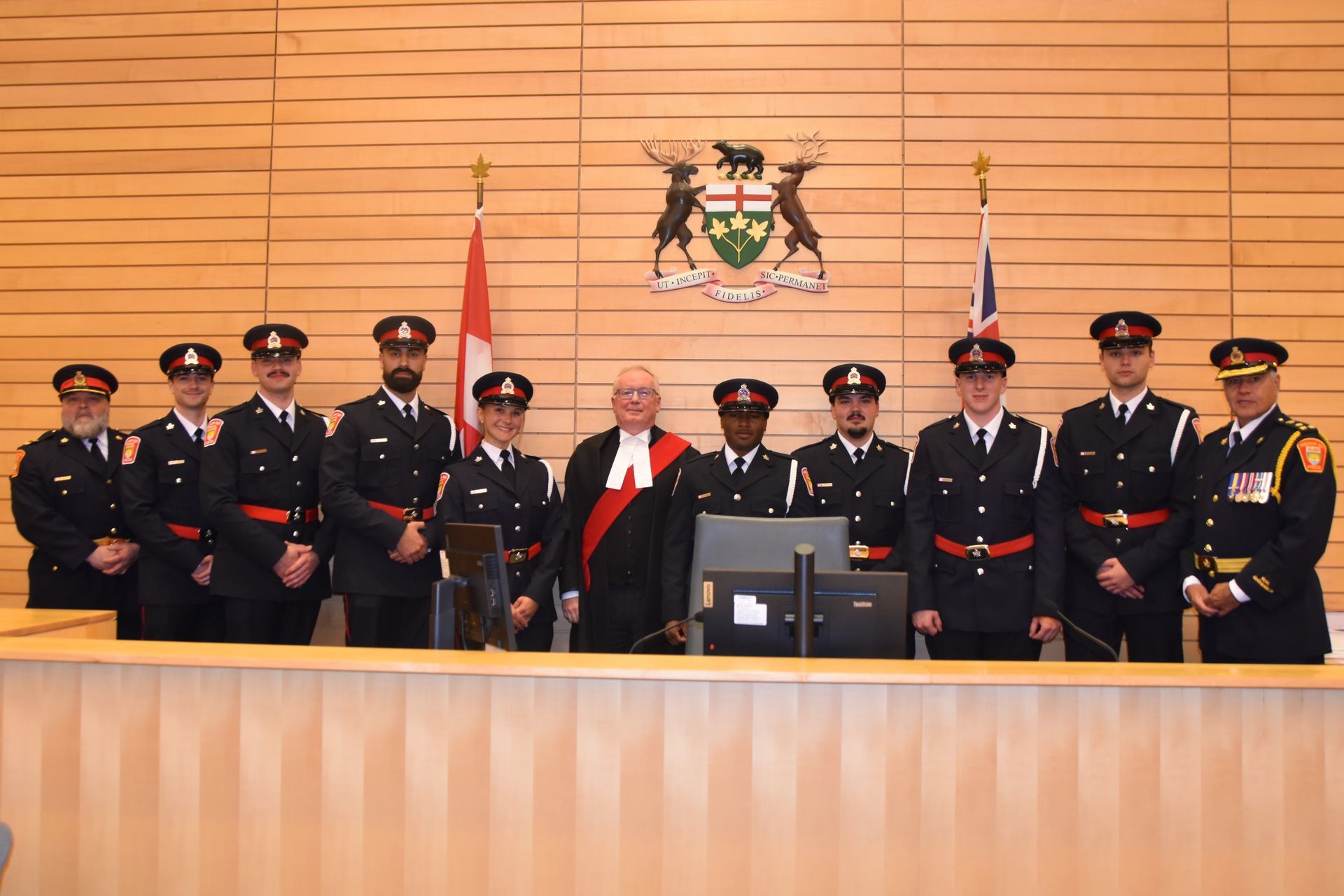
The Thunder Bay Police Service is proud to introduce our newest officers. With Ontario Court Justice March presiding, a swearing-in ceremony for eight constables was held on Thursday, October 22, at the Thunder Bay Courthouse, where they swore their oaths and received their badges and warrants cards from Police Chief Darcy Fleury. Please join us in welcoming: • Cst. Hussam Alkweyder • Cst. Zachary Defoy • Cst. Justin Dilauro • Cst. Curtis Gilbert • Cst. Aden Kristjanson • Cst. Cori Ranta • Cst. Roshaun Russell • Cst. Jack Wilkins The new officers recently completed their Basic Constable Training at the Ontario Police College and will be assigned to Primary Response platoons, beginning their coaching shifts as soon as this weekend. They join policing from diverse backgrounds which include military, social services, and aviation.
TB26041812
TB26041754
TB26041500
Latest Messages From the Chief
Throughout this municipal election, residents have raised important questions about public safety, homelessness, addictions, mental health, and the overall well-being of our community. These issues have been a major part of the public conversation, and understandably so. They affect our neighbourhoods, our businesses, and the sense of safety people expect. Our officers work every day to respond to crime, protect victims, enforce the law, and help keep our community safe. That work will always be a core responsibility of policing. At the same time, a significant number of calls for service involve people struggling with mental health concerns, addictions, homelessness, poverty, or other personal crises. In those situations, an arrest rarely addresses the reason the problem exists in the first place. In the three-month period between July 1 and Sept 30, our service received the following: Mental Health Act and related calls for service: 604 Personal Welfare Check calls: 1,074 Theft and Theft Shoplifting reports: 2,226 Robbery calls for service: 115 Lasting improvements in public safety requires a combined focus on enforcement, prevention and support. Our service delivers specific initiatives to address public safety and connect those in need to services. These include Project Support, with police officers paired with a social navigation coordinator conducting foot patrols in commercial areas, and the IMPACT units, pairing officers with mental health crisis workers. Police-led responses cannot substitute for sustained investment in the services and supports that prevent crises and reduce the need for people to call police in the first place. People are less likely to become involved in crime when they have access to positive supports for themselves and their families. That is why public safety is a shared responsibility. Municipal leaders play an important role through investments in, and advocacy for, housing, treatment, community programs, recreation opportunities, and services that help people before they reach a crisis point. As Chief, I recognize the importance of remaining politically neutral. My responsibility is to provide professional advice, work with the Council chosen by voters, and continue leading a police service that serves everyone fairly. Together, through enforcement where necessary and support where possible, we can build a safer, healthier, and stronger community for all. Darcy Fleury, M.O.M. Chief of Police
Latest The Shift

Above: In September, the Thunder Bay Police Service and the Royal Canadian Mounted Police (RCMP) announced that joint marine patrols are underway in the Thunder Bay area.